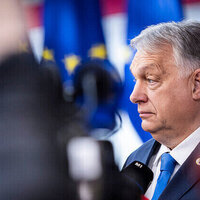



The talks will cover several urgent issues, including a massive loan for Ukraine and roughly 17 billion in EU funds frozen during Viktor Orban's 16-year rule.
Magyar's party, Tisza,won a sweeping victoryin the 12 April elections.
One of Tisza's campaign pledges was to restoreHungary's ties with the EU and convince it to unblock the funding, which has been withheld since 2022 over concerns about corruption andrule of law.
Brussels accused Orban's government of dismantling judicial independence, restricting media freedom and infringing on minority rights.
Of the 27 billion earmarked for Hungary, 17 billion remains frozen.
"The clock is ticking for a number of topics,"European Commissionspokesperson Paula Pinho said in Brussels on Thursday. Officials want to ensure that "once the government is in place, action can be taken" without delay, she said.
Commission PresidentUrsula von der Leyenurged swift action to "restore the rule of law, realign with shared European values, and reform" Hungary's policies.
Hungary's Orban urges party 'renewal' after vote loss
'Difficult financial situation'
Magyar has pledged to prioritise judicial independence, academic andmedia freedom, and anti-corruption measures to unlock the money.
"Hungary is in a very difficult financial situation," Magyar said on Monday, adding that his government's task would be "to bring home the money that is hers".
The frozen funds comprise 10 billion in Covid recovery money and 6.3 billion in cohesion funds. The deadline to claim the pandemic funds expires at the end of August.
Hungary has already lost around 2 billion due to the two-year suspension. It has also been paying 1 million a day since June 2024, plus a200 million fine, over Orban's refusal to align asylum processing with EU standards.
Magyar has also confirmed he would honour a December deal to support a 90 billion loan forUkraine, whichOrban consistently vetoed.
Beyond frozen funds, Hungary could access up to 16 billion to invest in defence through the EU's newSAFE security initiative. Combined with the other tranches, total available funds could represent roughly 15 percent of the country's GDP.
New Hungarian PM's campaign silence on gay rights worries activists
(with newswires)
Originally published on RFI