

Research led by Finnish climate scientists has identified "a new era of bioclimatic extremes in the terrestrial Arctic," with the past 30 years showing a "sharp increase" in extreme weather events like rain-on-snow, extreme winds, and drought.
Meanwhile, Canadian scientists are intensifying warnings that western Canada's glaciers--and their irreplaceable bounty of fresh water--are rapidly vanishing.
The Finnish-led Arctic study, published in the journal Science Advances, found extreme weather events are leading to "Arctic browning": the permanent disappearance of local species of flora and fauna. Such browning complicates a considerable body of evidence that global heating in the Arctic is producing "increased vegetation productivity" and hence broad-and often dangerous- "Arctic greening."
The Science Advances study addresses a "notable shortfall" in scientists' understanding of how global heating affects the Arctic. What's needed, the authors say, are "daily or subdaily" bioclimatic datasets, showing a precise relationship between a species' biological needs and climate and collected over sufficiently long time periods to allow scientists to track frequency and magnitude of extreme weather events.
"Arctic terrestrial ecosystems are being increasingly exposed to previously unseen extreme weather events," the study authors write, adding that nearly 30% of Arctic terrestrial areas experienced "at least one" such event between 1993 and 2022, compared to zero during the baseline period of 1950 to 1979.
Rain-on-snow events were the most common, with devastating consequences. They typically lead to the formation of impermeable crusts of ice over the plants that animals like caribou depend upon for survival. Rain-on-snow events are also particularly harmful to local Indigenous communities as they sharply limit the ability to hunt and otherwise range across the land.
The Finnish-led study lands as Canadian scientists double down on their warnings about the certain demise of western Canada's glaciers. In a study published in the journal Geophysical Research Letters last summer, a team led by Brian Menounos, professor of earth sciences at the University of Northern British Columbia, found that the glaciers of western North America lost 12% of their mass between 2021 and 2024.
Last year saw the glaciers recede yet further, Menounos told CBC News in a recent interview.
Part of an international team tracking global glacier health using aircraft observations and satellite data, Menounos estimates that western North America's glaciers permanently lost some 30 gigatonnes of ice in 2025. And he is unequivocal about the reason.
"The first and foremost factor really is warmer temperatures. And that's driven in large part by rising greenhouse gas emissions from fossil fuel use," he told CBC. The disappearance of western Canada's glaciers is now unavoidable, he added.
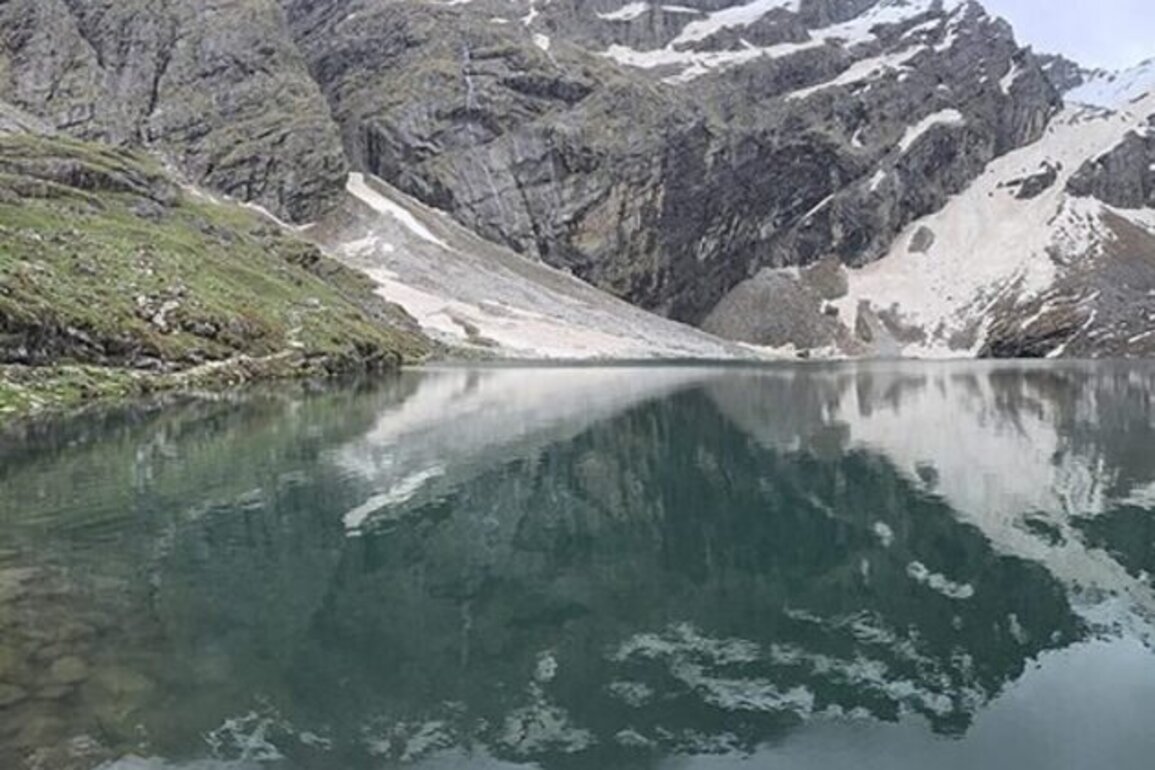
Published last spring, the United Nations' latest World Water Development report warns that the vanishing of glaciers across the globe bodes very ill for the more than two billion people and countless other life forms that depend on the fresh water these "essential natural water towers" have stored for millennia.
Source: The Energy Mix