

BRUSSELS (CN) - A few weeks before the new year, Marie Jeanne went to a theater show in the Marolles, the old working-class quarter in the belly of Brussels. The performers were North African by heritage, Belgian by birth - second generation, raised on these streets. They called themselves Marolliens, slipping between French and Dutch, spinning their parents' stories into something that belonged to the neighborhood.
"We had tears in our eyes," she said. "They carry all these layers - like a cake. And they feel at home here. That's not nothing."
Marie Jeanne is 67. She spent her career training the people who teach children. Now retired, she's rushing into a wine shop in Ixelles to grab sparkling wine ahead of "yet another family gathering" - but she stops to think out loud about what comes next.
Brussels, she says, is a good place to live. Messy, multilingual, mixed. But beyond that, she's not so sure.
It's Jan. 2, and the city is still shaking off the nights before. The Grand Place is quiet, its guildhalls catching pale winter light. A few tourists pick their way around damp cobblestones. On side streets, cafe owners hose down terraces and sweep up bottle caps. The city moves slowly, nursing its hangover.
On paper, Europe is doing fine. Life satisfaction averages 7.2 out of 10, according to a Eurostat report from December. Even the poorest households rated their lives above the midpoint. But in a union of 27 countries, averages can lie. What's comfortable in the Netherlands is crushing in Romania. What's possible in Germany is out of reach in Spain.
Brussels is an odd place to take Europe's temperature. It's the de facto administrative capital of a bloc of 450 million people, home to Eurocrats and diplomats who earn well above the local median. But it's also home to Molenbeek and Saint-Josse, among the poorest municipalities in Belgium. A single tram line connects gleaming EU institutions to neighborhoods where unemployment runs above 20%.
The city is majority foreign-born. On any given street, you'll find Belgians, Italians, Poles, Portuguese, North Africans, people from everywhere and nowhere, all navigating the same questions about rent, work, belonging and what comes next.
Americans hear a lot about Europe's speech laws and regulations. On the ground, the worries are more familiar: rent, health care, whether the kids will do better than their parents did.
Roberta, 26, moved to Brussels from Palermo, Italy, to try her luck as a chemist. She's familiar with economies that squeeze.
"The rent is impossible," she said. "Not just here. Everywhere in Europe." The numbers back her up: House prices across the EU have jumped 53% since 2010. Rents have climbed 25% - and in countries like Estonia, they've more than tripled.
"When people can't afford a life, something shifts," she said. A pause. "They harden. There's more hate in the air. You can feel it."
Her quality of life, on a scale of one to 10: six.
Thibault, 31, grabbing groceries with his friend Corentin, has watched the same thing. "Six years ago, the far right wasn't normal. Now it is."
"When people can't make rent, they stop caring about anything else. They'll vote for whoever promises to fix it - even if they don't agree with the rest," he said.
In Europe, headline inflation cooled to 2.1% by December- but the essentials like rent, health care, the things you can't skip, remain sticky at 3.5%.
Corentin, 37, is harder to rattle. He and Thibault are both artists, both from Lige in southeast Belgium, but he's more inclined to count what's still standing.
Belgium still offers artists a basic income when the work dries up - modest, but real. "That exists here," he said. "It's easy to forget."
Thibault agrees, though he's less sure how long it lasts. Culture, he says, is always the first budget to get cut. When money's tight, the arts feel like a luxury.
He thinks the political shifts elsewhere have had one unintended effect: They've focused people. "Even my parents are paying attention now. They see what's out there, and they don't want it here."
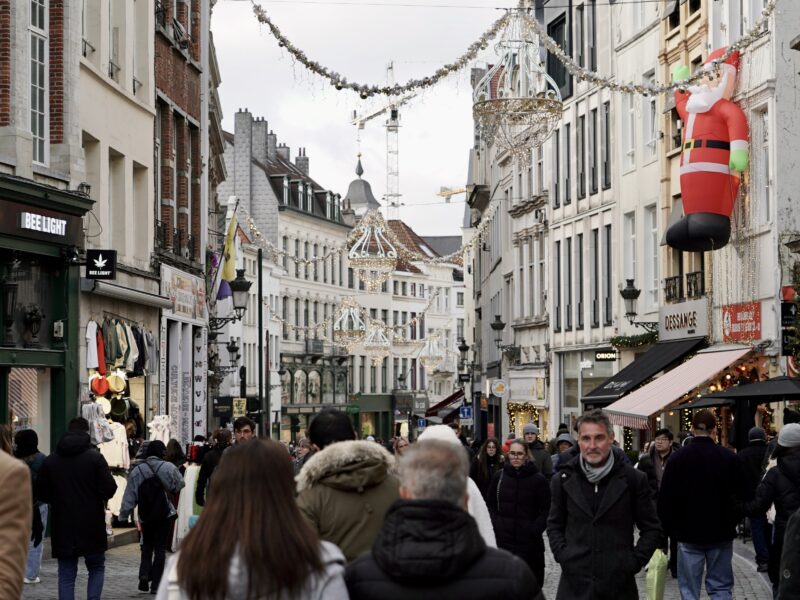
Mateo, 22, a Spanish music student, is waiting for a bus that will take him back to The Hague, where he studies. He flew in from Madrid for the holidays. He agrees that people are mobilizing more than before, citing student protests across Europe the past year.
Marie Jeanne has watched the same shift. "People don't trust politicians anymore. They don't even pretend to respect them." She waves a hand - at the coalitions that collapse, the negotiations that drag, the feeling that nobody's driving. "It poisons things. And nobody seems to care."
What scares her is where it leads. "Radicalization is growing. Political, religious - all directions. And now politicians are talking about war like it's normal." She shakes her head. "That's new. That wasn't the world I grew up in."
Still, nobody's ready to write off the European project. Trust in the EU has climbed to 52% - its highest point since the 2008 crash, up from 31% a decade ago.
Thibault brings up the French pension protests - months of strikes and marches in 2023 after the government tried to raise the retirement age. Millions refused to give ground. "Health care. Social protections. That's not going anywhere easily. It's in our bones."
His quality of life, for the record: nine out of 10.
Roberta finds her balance elsewhere - friends, festivals, small pockets where people still trust each other. "It's not a fix," she said. "But it keeps you sane."
Marie Jeanne has a different worry. "The poor are not in school, there are dropouts everywhere."
According to Eurostat, nearly one in 10 young Europeans leaves school early - 3 million people. One in four is considered at risk of poverty. In Spain and Italy, young people don't leave their parents' home until past 30.
"I only believe in education. That's all I've got," Marie Jeanne said. The Eurostat report bears her out: in several Eastern European countries, the gap in life satisfaction between those with and without a secondary education is 1.4 points.
For her, this is where it connects. The economic squeeze, the hardening, the drift toward extremes- none of it lands evenly. And democracy, she says, doesn't survive on autopilot. "It needs people who understand what it's for."
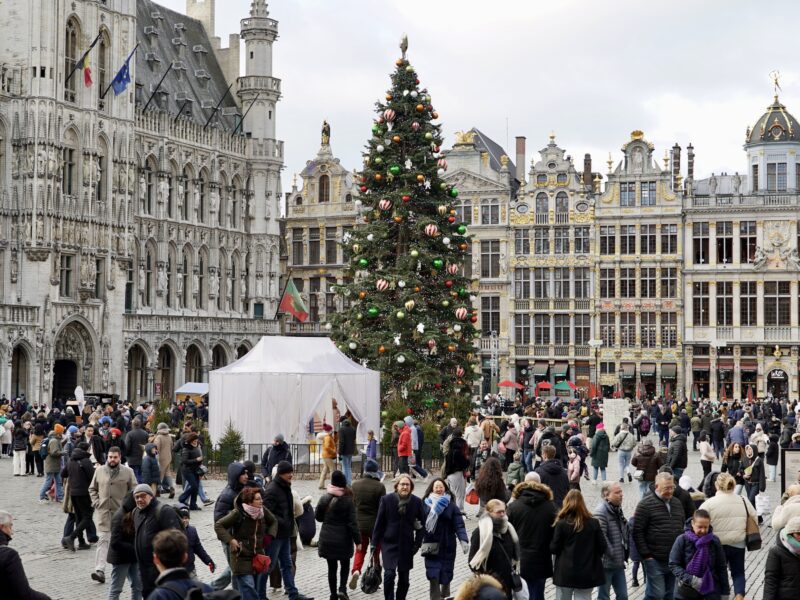
Outside, Brussels is slowly stirring. Christmas lights still hang over the Grand Place. A few tourists aim their phones at the facades. Snow falls hard for a few minutes, then stops. The new year has begun.
Yuval Molina is the EU correspondent for Courthouse News Service, based in Brussels.
Source: Courthouse News Service