

BRUSSELS (CN) - European Union officials scrambled Monday to head off a damaging trade war as U.S. President Donald Trump's threat to slap 30% tariffs on all EU goods barrels toward an Aug. 1 deadline.
The bloc's top trade negotiator bluntly warned the levies would be "absolutely prohibitive to any trade."
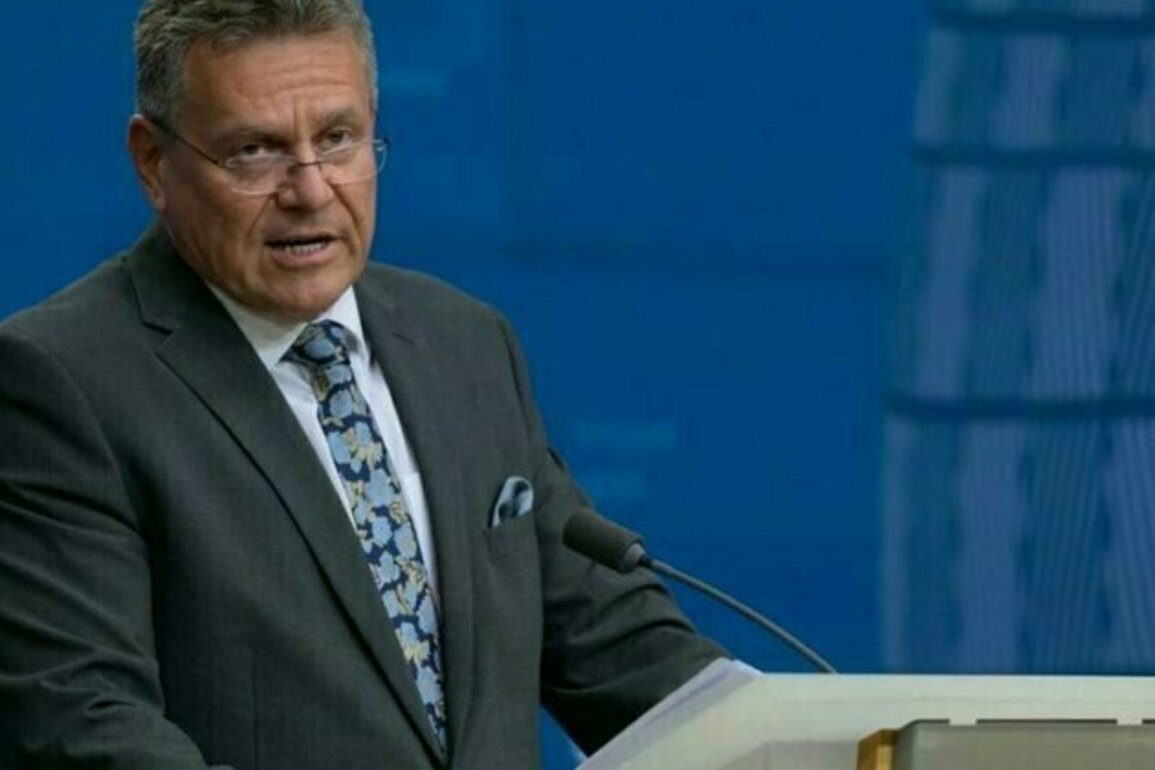
EU Trade Commissioner Maro efovi told reporters that European officials thought they were "very close to an agreement" after weeks of intense talks, only to be blindsided by Trump's Saturday bombshell delivered via his Truth Social network.
The threat would pile 30% duties on top of existing tariffs, including 50% on steel and aluminum and 25% on cars.
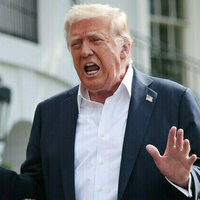
Trump fired off a letter demanding that "the European Union will allow complete, open Market Access to the United States, with no Tariff being charged to us" to slash the $236 billion U.S. trade deficit with Europe.
But EU officials say Trump hasn't spelled out what exactly he wants beyond sweeping market access.
The standoff threatens the world's biggest trading relationship - $1.7 trillion annually with "$400 billion flying across the ocean every single day," according to efovi. European markets took a hit, with Frankfurt's DAX falling 0.9% and Paris's CAC 40 down 0.5% by Monday afternoon. U.S. markets also declined, with the Dow off 0.1% and the Nasdaq down 0.4%.
efovi revealed just how close they'd gotten - negotiators had spent three months "going through 1,700 tariff lines, discussing all details from agriculture to spare parts for cars" before Trump's curveball. European Commission President Ursula von der Leyen has had direct phone calls with Trump, and talks continue "on all levels" including with White House officials.
Danish Foreign Minister Lars Lkke Rasmussen, whose country is chairing EU meetings this summer, said the 27 member nations found Trump's threat "absolutely unacceptable and unjustified." Speaking after trade ministers met in Brussels Monday, he said there was "a strong feeling in the room of unity" but emphasized: "We do not want a trade war with the U.S. We want to avoid it."
The European Commission - the EU's executive arm - postponed its own retaliation to keep negotiations alive. Von der Leyen announced Sunday that Brussels would delay countermeasures that were set to wallop $21 billion worth of U.S. products starting Tuesday, including soybeans, motorcycles and orange juice.
"We will therefore also extend the suspension of our countermeasures till early August," von der Leyen said, while warning the EU would "continue to prepare further countermeasures so we are always prepared."
efovi said he would speak with U.S. Commerce Secretary Howard Lutnick and Trade Representative Jamieson Greer Monday evening after ministers delivered "the strongest message I've witnessed since we started the discussion with the U.S." about protecting European jobs and businesses.
Trump's pattern sparks recession fears
Economists warned Trump's latest threat could push the eurozone economy dangerously close to recession, though many suspect the ultimatum is more about arm-twisting than serious policy.
"A tariff of 30% on EU exports would probably have the eurozone economy flirting with, but avoiding, a recession," said Rory Fennessy, senior economist at Oxford Economics. This fits Trump's playbook - he threatened 50% tariffs in May, "only to quickly backtrack following discussions with EU politicians."
Fennessy's economic modeling shows the escalating damage from higher tariffs. A 30% rate would deliver "a smaller, but not negligible, impact" compared to the 50% threat Trump floated in May, which would have slashed eurozone export volumes by an additional 1.4% through 2026. That damage would compound the 1.4% hit already expected from baseline 10% tariffs, creating "a cumulative impact of 2.5%-3% on eurozone goods exports by end-2026."
The threat comes as Germany, Europe's largest economy, already faces mounting export challenges.
The Bundesbank - Germany's central bank - reported Monday that the country's export market share has declined since 2017, with particularly steep losses since 2021. It warned that China has increasingly emerged as a competitor, making additional U.S. tariffs an extra blow to German competitiveness.
"Adding to this pressure, the recent appreciation of the euro is weakening Germany's international price competitiveness, dampening its export performance and GDP growth forecasts," said Sonali Chowdry of DIW Berlin, a German economic research institute, in conversation with Courthouse News. "In the German labor market, these combined factors are exerting downward pressure on wage growth."
Pharmaceutical and high-tech industries would face the biggest hit given their heavy U.S. market exposure, while even sectors with minimal direct U.S. trade would suffer through Europe's integrated supply chains. Germany's automotive sector would be particularly vulnerable through its support networks in Central and Eastern Europe.
Business lobby warns of supply chain chaos
The economic warnings are echoing through corporate boardrooms as European business groups urge both sides to find common ground.
In conversation with Courthouse News on Monday, BusinessEurope, the EU's main business lobby, called 30% tariffs "an unacceptable outcome."
Thibaut L'Ortye, of the American Chamber of Commerce to the EU, said that the disruption of supply chains will "ultimately cost consumers."
The response has exposed familiar divisions among EU powers. France favors immediate retaliation and wants to deploy the EU's anti-coercion instrument - a tool designed to hit foreign banks and businesses when the bloc faces economic pressure.
Germany had pushed for a quick agreement to protect its vulnerable car industry. Italy has taken a middle path, with Prime Minister Giorgia Meloni warning that "an internal trade war within the West would make us all weaker."
However, not everyone in Brussels is buying the commission's wait-and-see approach. Bernd Lange, who leads the European Parliament's trade committee, called Trump's letter "both impertinent and a slap in the face," saying he was "firmly convinced" the EU's countermeasures "should come into force as planned Monday [night]."
Unconfirmed reports suggest the EU may already be making concessions elsewhere. Brussels reportedly shelved plans for a digital tax on tech companies that would have hit U.S. giants like Apple and Meta. Trump imposed 25% tariffs on Canadian goods in retaliation for Canada's digital services tax.
Trade ministers reviewed Monday a second package of retaliatory tariffs targeting $72 billion worth of U.S. exports, scaled back from an original $100 billion proposal. A larger wave of countermeasures would hit U.S. aircraft and automobiles but requires unanimous approval from all 27 member states.
Rasmussen highlighted the EU's economic leverage, noting that increasing trade within the European single market by just 2.5% "will substitute a decrease in the U.S. by 20%." He said the bloc was accelerating deals with other regions, including finalizing agreements with South America's Mercosur bloc and Mexico before the end of the year.
The Aug. 1 deadline gives negotiators two weeks to reach a deal or face the biggest trade dispute between the allies since World War II. Trump's threat has strengthened EU resolve to coordinate with other nations facing similar tariffs, including Canada and Japan, while the bloc signed a trade agreement with Indonesia Sunday as part of its strategy to reduce dependence on U.S. trade.
Source: Courthouse News Service